Explore the compelling reasons why sugarcane bagasse is revolutionizing the food service industry. Understand its environmental benefits, superior performance, and how choosing bagasse tableware aligns your business with growing consumer demand for sustainability in the USA, European, and Australian markets.
Bagasse is the fibrous residue left behind after sugarcane juice extraction.
Once treated as agricultural waste, it is now valued as a renewable, compostable raw material ideal for sustainable food packaging.
By transforming this byproduct into high-performance molded fiber products, we reduce landfill waste and support circular manufacturing.
Key Takeaway:Bagasse turns agricultural waste into certified food packaging — tree-free, PFAS-free, and ready for global eco-conscious markets.
Bagasse packaging stands out as an ideal alternative to plastic and paper disposables — offering a unique balance of compostability, strength, and food-grade safety.
The chart below compares bagasse with conventional materials across key categories like environmental friendliness, durability, and cost.
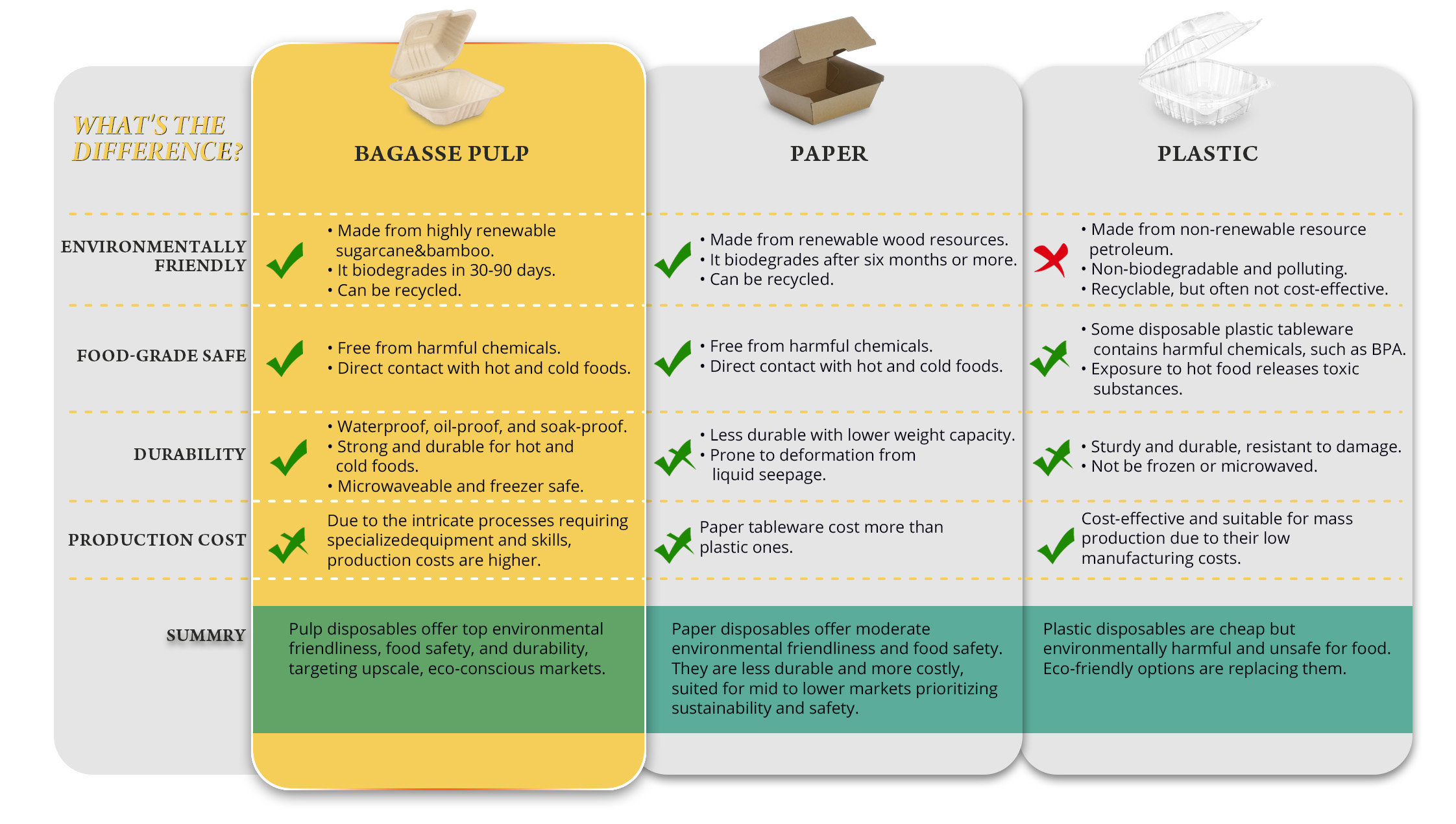
Key Takeaway: Bagasse packaging provides the sustainability of paper with the strength of plastic — without the downsides of either. It’s the smart choice for modern food brands and global eco compliance.
Ready to offer your customers high-quality, eco-friendly tableware that aligns with their values and supports a healthier planet? Partner with Ecopulppack for your B2B wholesale needs.
Bagasse tableware is designed to be compostable, meaning it can break down into nutrient-rich soil under specific composting conditions. This diverts waste from landfills and contributes to a circular economy.
BPI (North America): Meets ASTM D6400/D6868 for industrial compostability.
Key Takeaway: Look for these certifications to ensure the bagasse tableware you source meets genuine compostability standards and food safety regulations.
Elegant and eco-friendly for weddings, corporate events, festivals. Sturdy for various cuisines.
Grease-resistant with secure lids, perfect for restaurants offering delivery or takeaway.
A sustainable choice for dine-in or to-go, aligning with eco-aware customer values.
Suitable for schools, hospitals, and corporate cafeterias reducing their environmental footprint.
Key Takeaway: Bagasse tableware’s versatility and eco-credentials suit a wide array of food service applications.
Key Takeaway: Legislative pressures, consumer demand, and corporate responsibility are creating a strong market for sustainable packaging like bagasse tableware.
At EcoPulpPack (representing ecopulppack.com), we are deeply committed to not just providing sustainable products, but also to employing sustainable manufacturing processes.
Key Takeaway: Partnering with EcoPulpPack means choosing a supplier that shares your commitment to environmental responsibility.
Yes. High-quality bagasse tableware is surprisingly strong and rigid. It handles hot, wet, or oily food without bending or soaking through — often outperforming standard paper plates in real-world use.
Absolutely. Bagasse tableware is microwave-safe and freezer-safe, making it ideal for both food preparation and storage. It maintains its structure under both hot and cold conditions.
When stored in a cool, dry place, bagasse tableware lasts 1–2 years or more without degrading. It only starts to break down when exposed to composting conditions such as moisture, heat, and microbial activity.
Using visible eco-friendly packaging like bagasse helps your brand stand out. It signals your commitment to sustainability, supports compliance with packaging regulations, and builds trust with B2B buyers and end consumers who prioritize environmental responsibility.
Yes. Bagasse is 100% compostable and biodegradable. Under industrial composting conditions, it typically breaks down within 60–90 days, leaving no toxic residue.