Understanding Biodegradable Tableware: Definition and Mechanism
Biodegradable tableware refers to single-use dining products designed to break down naturally through microbial activity. Unlike conventional plastic, which can persist for centuries, biodegradable materials decompose into water, carbon dioxide, and biomass—ideally leaving no toxic residue.
The key to this process lies in microbial biodegradation, where bacteria and fungi consume organic material under specific environmental conditions. Factors such as temperature, moisture, oxygen, and material composition all influence the speed and completeness of breakdown.
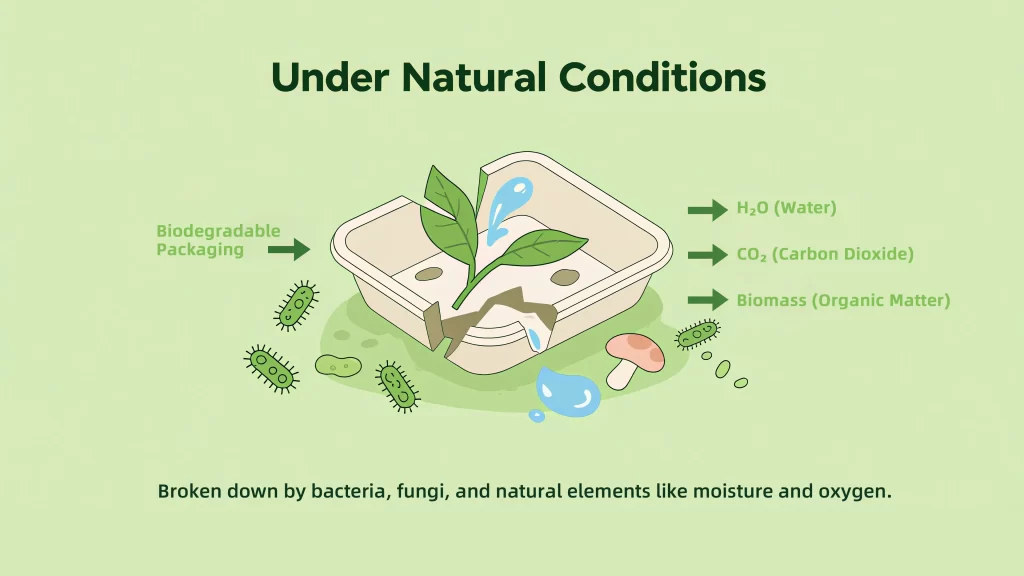
While this sounds straightforward, not all biodegradable products perform the same in real-world environments—a point we’ll revisit shortly.
Biodegradable vs Compostable: Not the Same
One of the most common misconceptions is that biodegradable and compostable mean the same thing. In fact, the distinction is crucial—especially for buyers in regulated markets.
| Feature | Biodegradable | Compostable |
|---|
| Breakdown Timeframe | Undefined, varies by material | Defined (usually 90–180 days) |
| Environment | Natural conditions possible | Requires industrial composting (often) |
| Certification Available | Rare, loosely defined | Strict (e.g., EN13432, ASTM D6400) |
| Residue | May leave microplastics | Leaves no toxic residue |
While all compostable items are biodegradable, not all biodegradable items meet the stringent conditions needed for certified compostability. For example, many “biodegradable” plastics labeled as PLA need industrial heat to break down, and may not degrade at all in a landfill.
Materials Used in Biodegradable Tableware
Not all biodegradable materials are created equal. Below are the most common options, each with distinct properties suited to different applications:
🟢 Bagasse (Sugarcane Pulp)
A fibrous byproduct of sugarcane processing, bagasse is widely used for plates, bowls, and clamshell containers. It’s sturdy, heat-resistant, and commercially compostable—making it one of the most trusted choices in sustainable foodservice.
👉 Related: Explore our Bagasse Tableware Collection
🌾 Wheat Straw Fiber
Lightweight and microwave-safe, wheat straw tableware is made from leftover stalks after grain harvest. It’s suitable for dry or moderately moist foods, and naturally biodegradable without coatings.
🌽 Cornstarch (PLA-based)
Corn-based PLA (polylactic acid) mimics plastic and is often used in utensils or cup linings. However, its breakdown requires industrial composting conditions, which are not always available in every region.
🎍 Bamboo Pulp
Bamboo-based items are durable and reusable for multiple uses. They biodegrade under natural conditions and are popular in upscale eco-packaging.
Each material suits a different market or application. Buyers should evaluate based on use case, destination market, and whether plastic bans or composting systems are in place.
Real-World Breakdown: Environment Matters More Than Label
A product labeled “biodegradable” may sound ideal—but where and how it decomposes makes all the difference.
For instance, a PLA spoon may take 90 days in an industrial composting facility, but won’t degrade at all in a landfill. Conversely, uncoated bagasse trays may break down naturally in backyard compost or soil over time.
📌 Tip for Export Buyers: Always ask for real-world test results or certifications like ASTM D6954 (for biodegradable plastics) or ISO 14855 (aerobic biodegradability).
You can read more about plastic breakdown environments from the EPA’s Sustainable Materials Management page.
Regulations, Certifications, and Compliance
Unlike compostable tableware, which is governed by widely accepted certifications (e.g., EN13432, ASTM D6400), biodegradable products have fewer regulatory guardrails—making greenwashing more common.
That said, buyers should look for the following when sourcing from manufacturers:
- ASTM D6954 – Standard guide for biodegradation of plastics in the environment
- ISO 14855 – Standard for aerobic biodegradation under controlled composting
- Country-specific bans – e.g., France, Canada, and California all have varying restrictions on bioplastics and mislabeling

For export, it’s crucial that labeling is compliant with target market laws to avoid product seizure or reputational damage.
What B2B Buyers Should Ask Before Ordering
If you’re sourcing biodegradable tableware in bulk, don’t stop at the marketing label. Ask your supplier:
- What is the material composition? Is it 100% plant fiber or does it contain PLA or additives?
- Has the product been tested under actual composting or landfill conditions?
- Is the product certified under any international standards?
- What is the MOQ and packaging type? Is it packed in recyclable or biodegradable outer cartons?
- Does it comply with the destination country’s labeling laws or plastic bans?
Only when these questions are answered clearly can you be confident you’re not being misled by vague “eco-friendly” claims.
FAQs
-
Will biodegradable tableware break down in the ocean or landfill?
Not always. Most biodegradable products require oxygen, moisture, and microbial presence—conditions rarely found in landfills or marine environments.
-
Is biodegradable tableware microwave-safe?
It depends on the material. Bagasse and wheat straw usually are; PLA-based items generally are not.
-
What’s the difference between biodegradable and oxo-degradable?
Oxo-degradable plastics break down into microplastics via additives and sunlight exposure—not true biodegradation. Many countries are banning them.
-
Can biodegradable packaging reduce plastic tax liabilities?
In some regions, yes—especially if the packaging meets certified compostability or recyclability standards.
-
Is biodegradable always the best choice over recyclable?
Not necessarily. In areas without composting infrastructure, recyclable packaging may be more sustainable.
Conclusion: Biodegradable Tableware Is Only Part of the Solution
Biodegradable tableware can be a powerful tool in reducing waste—but only when understood correctly. For businesses, it’s not enough to choose a “green-sounding” product. You need to evaluate material performance, certification, local disposal conditions, and regulatory compliance.
At [Your Brand Name], we manufacture certified bagasse-based biodegradable tableware for export to Europe, North America, Australia, and more. Our products are tested, reliable, and ready to support your sustainability goals.
🟩 Explore our product range or request a quote today.