Ounces, Inches, and Grams: Decoding the “Three-Dimensional Language” of Eco-Friendly Tableware
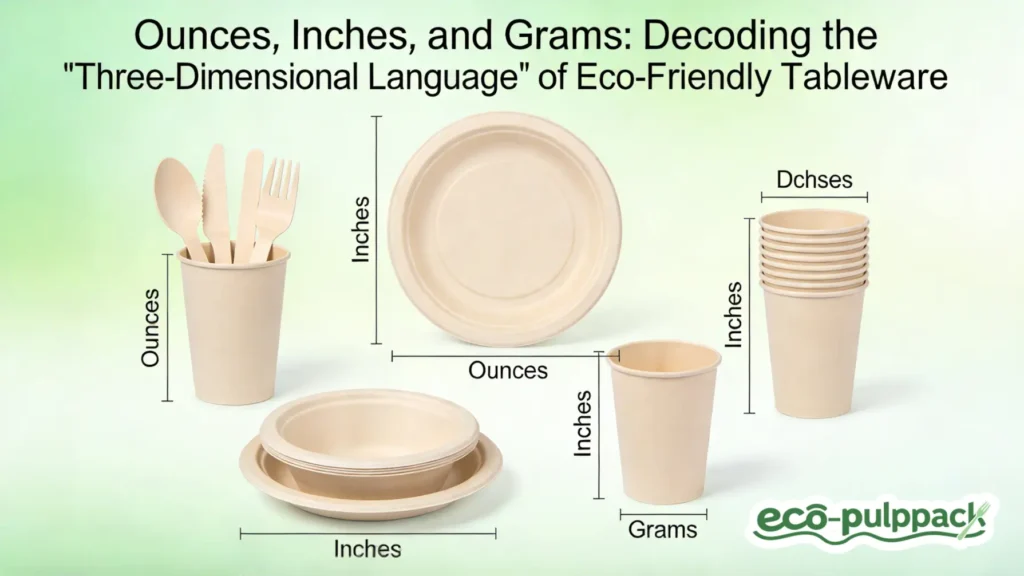
Are you puzzled by numbers like “12oz,” “8in,” or “150g” when sourcing tableware for your restaurant? These aren’t random codes—they’re the key to unlocking a product’s true value.
Consider this article your “specification decoder.” We’ll translate how these numbers precisely describe the three core attributes of bagasse tableware: capacity (how much it holds), dimensions (how well it fits), and weight (feel and cost). Mastering this language will empower you to navigate unit barriers in global procurement and make more confident, informed decisions.
Beyond “Green” Claims: How ISO 14040 Validates Our Bagasse Tableware
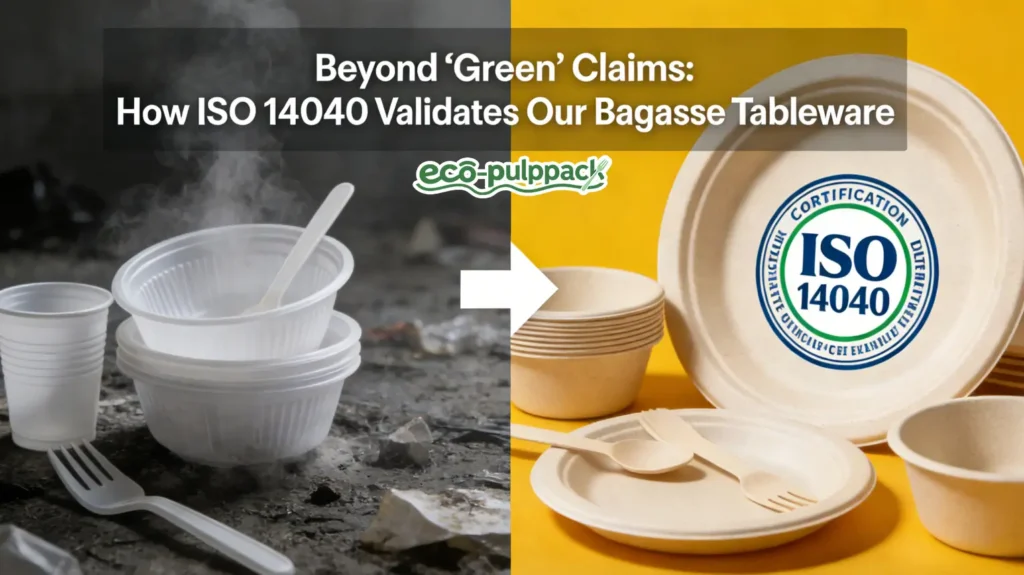
In a nutshell: This article details how we use the ISO 14040 Life Cycle Assessment (LCA) standard to scientifically measure and validate the environmental claims of our bagasse tableware. We transparently walk you through the product’s full life cycle, explain the resulting environmental advantages, and show how this data-driven approach translates into tangible business value for our partners.
OK Compost vs. BPI Certification: What’s the Difference and Which One Do You Need?
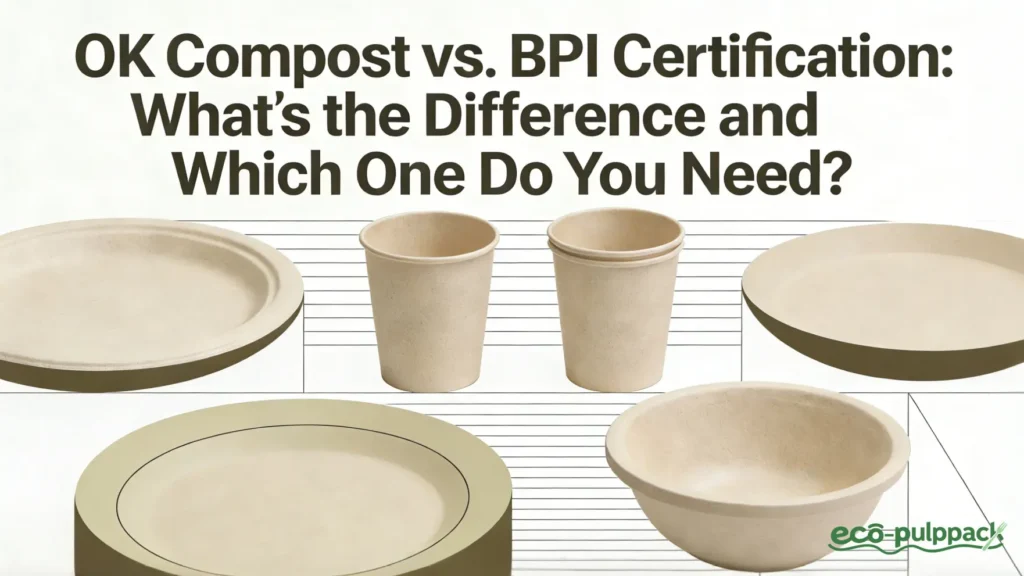
OK Compost and BPI are not the same. BPI is the primary compostability certification required for the U.S. market, while OK Compost is based on EN 13432 and widely accepted in Europe and global trade. Choosing the right certification depends on where your products are sold and composted.
The Sustainable Procurement Tool: How LCA Evaluates Bagasse vs. Conventional Tableware
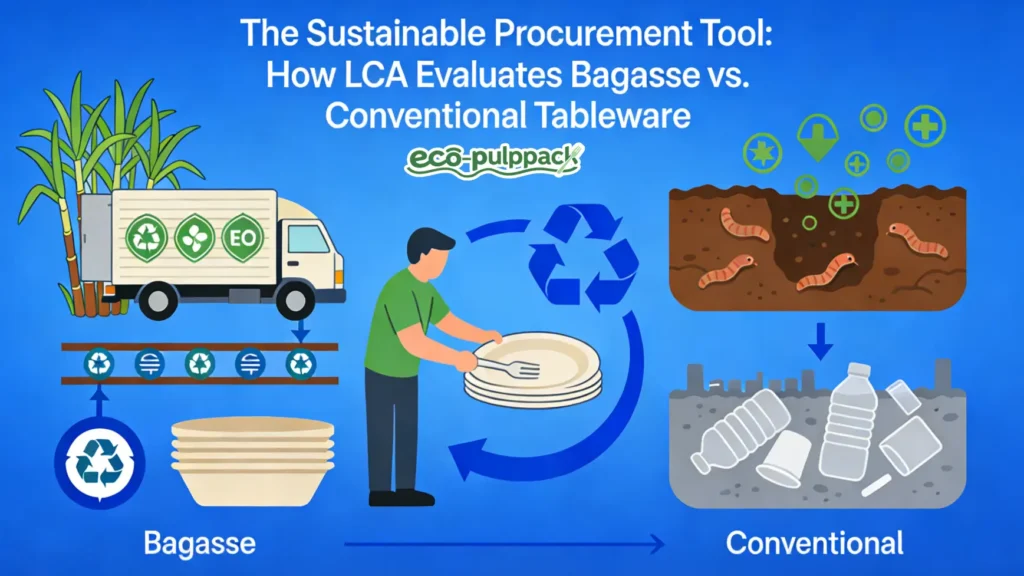
Regulations, corporate sustainability commitments, and rising consumer expectations have transformed tableware procurement from a simple cost-center into a strategic function managing compliance and brand reputation. Buyers must now justify choices with data, not just claims. This is where Life Cycle Assessment (LCA) becomes an essential procurement defense tool—and what it reveals about bagasse is critical for future-proofing your supply chain.
LCA offers a quantified, ISO-based framework for comparing the environmental performance of different materials. For disposable tableware, it provides the clearest picture of how bagasse stacks up against plastic, virgin paperboard, recycled paperboard, and PLA.
Recycled Content Certification: What It Means for Packaging Compliance
As businesses and consumers alike increasingly focus on sustainability, the demand for **recycled content** in packaging is higher than ever. Companies that incorporate recycled materials into their products or packaging can help reduce waste and promote a **circular *eco*nomy**. However, to ensure transparency and trust, many of these businesses opt to obtain **recycled content certification**.
In this article, we will explore what **recycled content certification** is, why it’s important for businesses, and how ***Eco*pulppack** can assist you in achieving certification for your *eco*-friendly products.
Eco Certifications for Bagasse Packaging: Meeting Global Compliance Standards
As global regulations on single-use plastics tighten, eco-friendly packaging is no longer a marketing option—it’s a compliance requirement. For importers, distributors, and brand owners, choosing certified compostable tableware is essential to ensure smooth customs clearance, reliable labeling, and full environmental credibility.
At Ecopulppack, our bagasse and bamboo pulp tableware complies with internationally recognized certifications such as EN13432, BPI, DIN CERTCO, FDA, and LFGB. These certifications guarantee that every plate, bowl, or clamshell we produce meets the highest standards of food safety, compostability, and sustainability across global markets.
EN13432 Explained: The EU Compostability Standard for Tableware
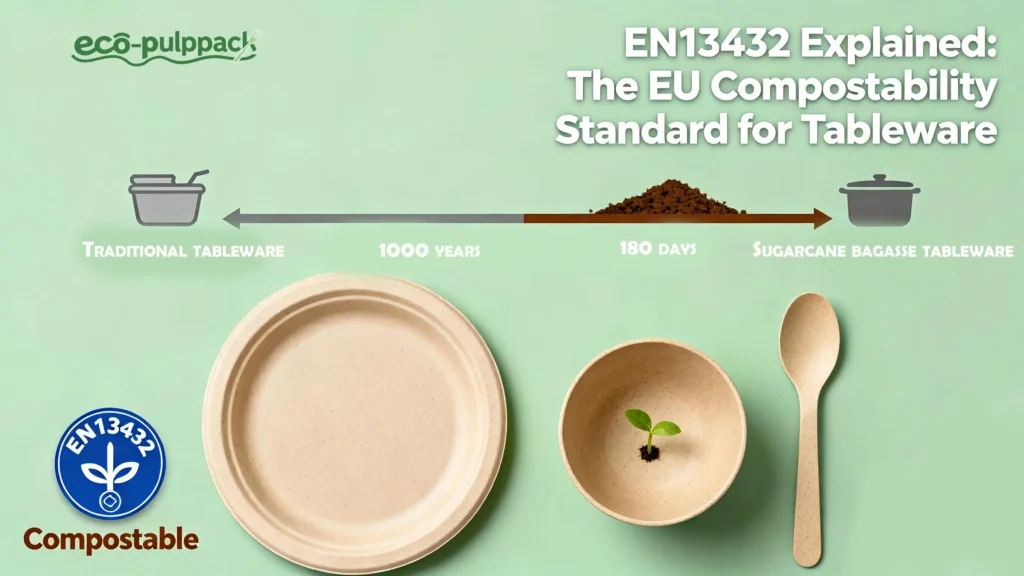
In today’s environmentally conscious world, sustainability is no longer an option—it’s a requirement. Across Europe, strict regulations govern the use of disposable packaging and tableware, ensuring that only compostable and biodegradable materials reach the market. One of the most recognized benchmarks for this is EN13432, the EU compostability standard that defines how materials must behave in a composting environment.
For manufacturers and importers of biodegradable tableware, understanding EN13432 is essential to ensure compliance, gain buyer trust, and expand into European markets.
What Is Compostable Packaging?
Compostable packaging refers to materials designed to break down completely into natural elements—such as water, carbon dioxide, and biomass—through composting, leaving no toxic residue behind. Unlike traditional plastics, compostable packaging supports a circular economy by turning waste into nutrient-rich soil instead of pollution.
FSC Mix Explained: How Bagasse and Certified Pulp Work Together in Eco Packaging
The FSC Mix label is one of the most common — yet often misunderstood — certifications in the sustainable packaging industry.
While “FSC 100%” means all fibers come from certified forests, and “FSC Recycled” covers post-consumer materials, FSC Mix offers a flexible and traceable model for combining certified pulp with non-wood renewable fibers, such as sugarcane bagasse.
For manufacturers of molded fiber packaging, understanding FSC Mix is essential. It bridges the gap between traditional forest-based certification and the growing demand for plant-based, renewable, and compostable materials.